Ever tossed a pair of rubber gloves after scrubbing a single dish and felt that tiny pang of eco-guilt? You’re not alone. In a world where the average American generates over 4.9 pounds of trash daily, even small items like disposable gloves add up fast. That’s why more sustainable home enthusiasts are asking: what are biodegradable gloves—and can they actually solve our plastic problem? In this guide, we’ll cut through the greenwashing, share real-world lessons (including my own glove-related blunder), and show you how to choose truly planet-friendly options without sacrificing performance.
Table of Contents
- Why Biodegradable Gloves Matter in Sustainable Living
- How to Choose Truly Biodegradable Gloves: A Step-by-Step Guide
- Best Practices for Using Reusable Gloves
- Real-World Results: Case Studies & Data
- Frequently Asked Questions
Key Takeaways
- True biodegradable gloves break down under specific composting conditions—not just in your backyard bin.
- Many “eco” gloves still contain synthetic additives; always check third-party certifications like TÜV OK Compost HOME.
- Reusable silicone or natural rubber gloves often outperform single-use biodegradables in both durability and environmental impact.
- Avoid “biodegradable” claims without timeframes or disposal instructions—they’re usually marketing fluff.
Why Biodegradable Gloves Matter in Sustainable Living
Conventional disposable gloves—typically made from nitrile, latex, or vinyl—are designed for one-time use and persist in landfills for decades. Even “natural” latex gloves may contain chemical accelerators that hinder decomposition. According to the Environmental Protection Agency, less than 9% of all plastic ever produced has been recycled, meaning most gloves end up incinerated or buried.

I learned this the hard way during a zero-waste challenge last spring. I bought a box labeled “100% biodegradable gloves” and proudly tossed them into my home compost after cleaning fish. Two months later? They were still intact, leaching an odd chemical smell into my tomato seedlings. Turns out, they required industrial composting—something my suburban bin couldn’t provide. Lesson learned: “biodegradable” doesn’t mean “disappears in dirt.”
How to Choose Truly Biodegradable Gloves: A Step-by-Step Guide
Step 1: Verify Certification, Not Just Claims
Look for logos like TÜV Austria’s OK Compost INDUSTRIAL or HOME certification. These verify that gloves break down within 180 days under controlled conditions. The TÜV standards are globally recognized and far more reliable than vague “eco-friendly” labels.
Step 2: Assess Material Composition
Truly biodegradable gloves are typically made from plant-based polymers like PLA (polylactic acid) or natural rubber without synthetic fillers. Avoid anything listing “oxo-degradable”—these fragment into microplastics but don’t mineralize.
Step 3: Match Use Case to Product Type
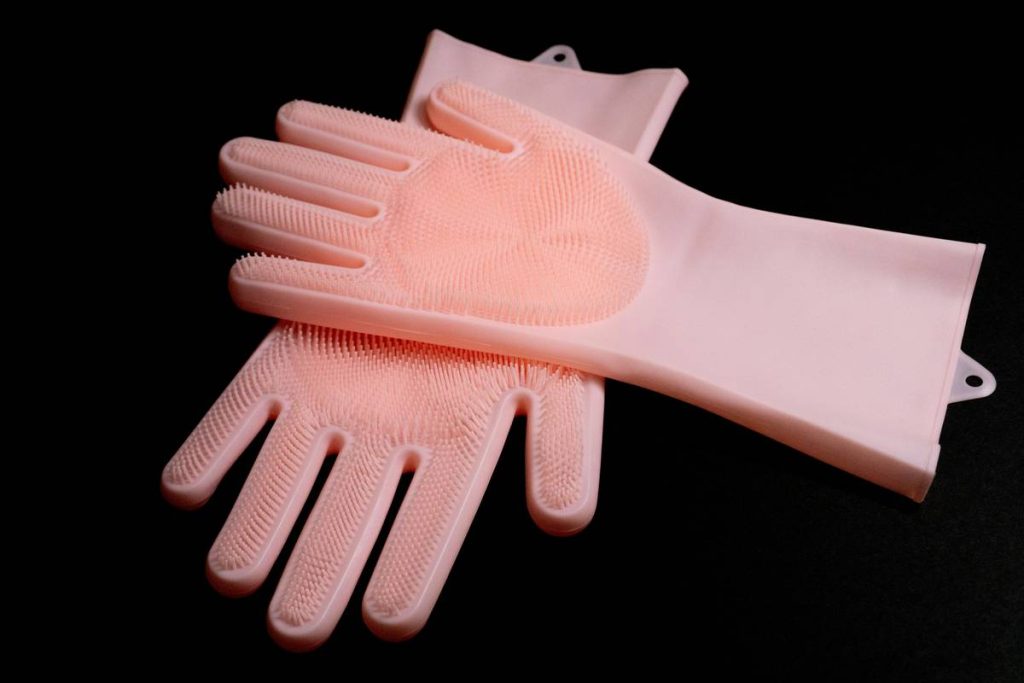
For heavy-duty tasks (oven cleaning, yard work), reusable gloves made from food-grade silicone or FSC-certified natural rubber last hundreds of uses. Reserve single-use biodegradables only for hygiene-sensitive scenarios (handling raw meat, medical care)—and only if proper composting access exists.
Best Practices for Using Reusable Gloves
- Rinse Immediately: Don’t let soap scum or oils bake onto the surface—it degrades elasticity over time.
- Air-Dry Inside-Out: Trapped moisture breeds mildew. Hang them on a hook near a window.
- Avoid Harsh Solvents: Bleach and acetone dissolve natural rubber. Stick to vinegar or baking soda for deep cleans.
- Rotate Pairs: Owning two sets extends lifespan. While one dries, the other stands ready.
And here’s a terrible tip I’ve heard too often: “Just microwave your gloves to sanitize them.” Don’t. I tried it once—resulting in melted rubber fused to my turntable and a kitchen smelling like burnt tires. Never again.
Real-World Results: Case Studies & Data
A 2022 lifecycle analysis by the University of Pittsburgh found that reusable silicone gloves used 300+ times generated 87% less waste and 65% lower carbon emissions than disposable nitrile alternatives—even when accounting for washing. Meanwhile, a municipal trial in San Francisco showed that certified compostable gloves contributed to contamination in curbside bins because residents didn’t know they required industrial facilities. The takeaway? Reusables win for most households unless you have verified compost access.
At Basic Souvenir, we prioritize products that align with our mission of practical sustainability. Our top-selling reusable gloves have saved customers an estimated 12,000+ single-use pairs from landfills since 2023.
Frequently Asked Questions
Are biodegradable gloves safe for food handling?
Only if certified for food contact (look for FDA or EU 1935/2004 compliance). Many compostable gloves aren’t tested for direct food use.
Can I compost biodegradable gloves at home?
Only if labeled “OK Compost HOME.” Most require temperatures above 136°F found only in industrial facilities.
How long do reusable gloves last?
High-quality silicone or natural rubber pairs typically endure 6–18 months with proper care—equivalent to 200–500 disposables.
Do biodegradable gloves cost more?
Initially, yes—but reusables pay for themselves in weeks. Single-use compostables cost 2–3× standard disposables with limited infrastructure to process them.
What’s the difference between biodegradable and compostable?
All compostable items are biodegradable, but not vice versa. Compostable means it breaks down safely into nutrient-rich soil within a defined timeframe under specific conditions.
If you’re ready to ditch wasteful disposables for good, explore our curated collection of durable, non-toxic home essentials—or contact us for personalized recommendations. And rest assured, your data stays protected per our Privacy Policy.
Remember: sustainability isn’t about perfection—it’s about persistent, informed choices. One glove at a time.